Do we need Epic or Oracle to use PreOpConnect?+
No. The office-policy workspace is separate from EHR integration and connects participating facilities with medical and surgical offices. A standalone, patient-centered clinical workspace for ambulatory surgery centers is planned; it is not currently an activated replacement for your clinical record.
What can an account user access today?+
Existing users can sign in to the office-policy workspace. Facilities can prepare and manage updates, connect with participating offices and track explicit acknowledgments. Facility access and live email delivery depend on configuration and authorization. The clinical workflows shown on this page are development previews or planned capabilities.
Can we replace paper charts with PreOpConnect today?+
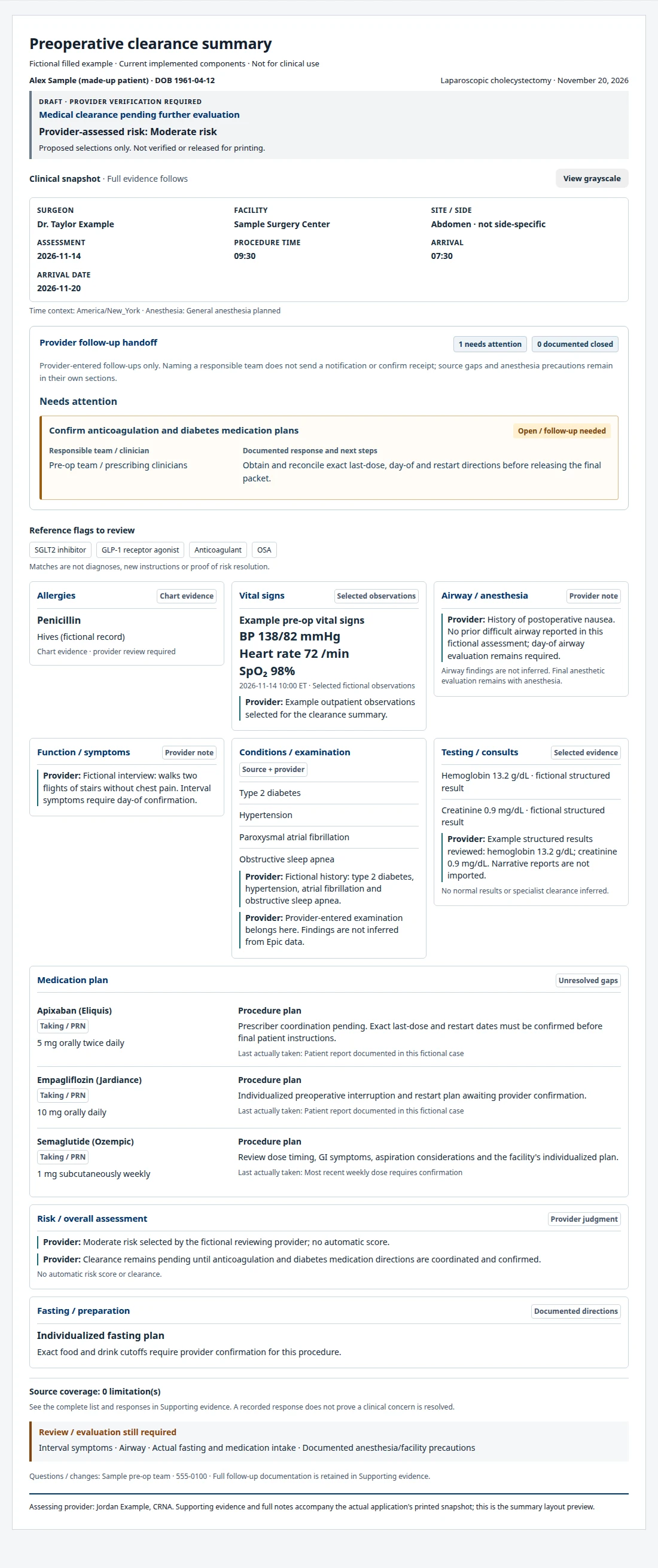
Not yet. The planned standalone clinical workspace would bring clearances, labs, ECGs, imaging reports and specialist information together for advance and bedside review. Patient-record storage, approved clinical deployment and team access must be established before a facility uses it for patient care.
Can specialists share a clearance and send it back into Epic?+
That is part of the planned workflow, not a currently activated capability. The goal is for either the medical office or a specialist to begin one assessment, with other clinicians adding their own input and resolving discrepancies. Shared editing and EHR write-back require separate implementation and approval.
How would the Patient Journey Timeline populate?+
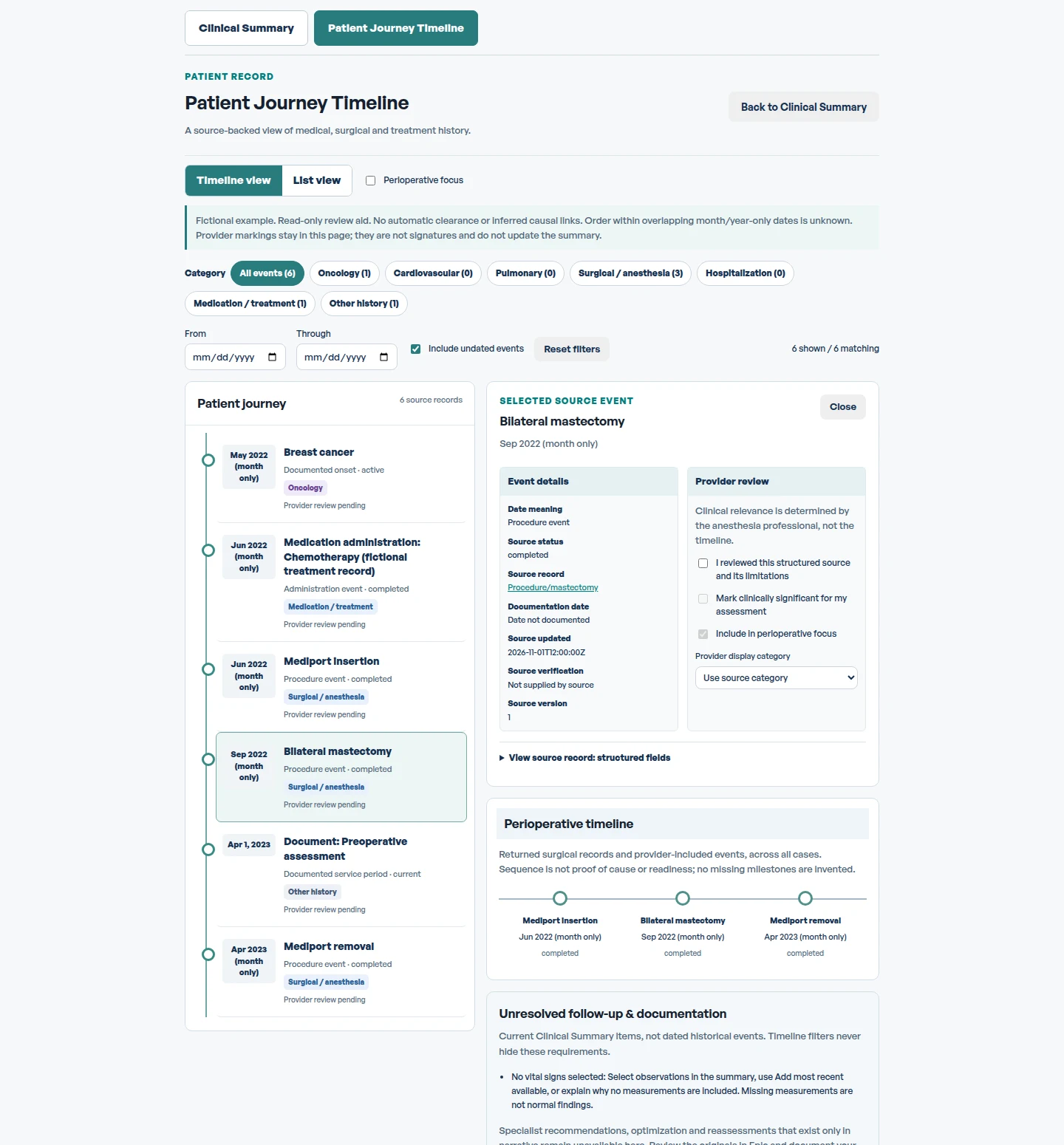
The current Epic development build organizes supported structured records from an authorized SMART on FHIR launch. It preserves source dates and missing information; it does not invent events or infer why one event caused another. A clinician reviews the evidence and confirms significance. Saved cross-office approval and Oracle timeline support remain planned.
Who decides whether a patient is ready for surgery?+
The responsible clinical team. PreOpConnect is designed to organize evidence, surface items for review and document decisions; it does not automatically clear a patient. A flag needs a documented clinical response or plan, and the anesthesia team retains responsibility for its assessment and readiness decision.
What would patients receive before and after surgery?+
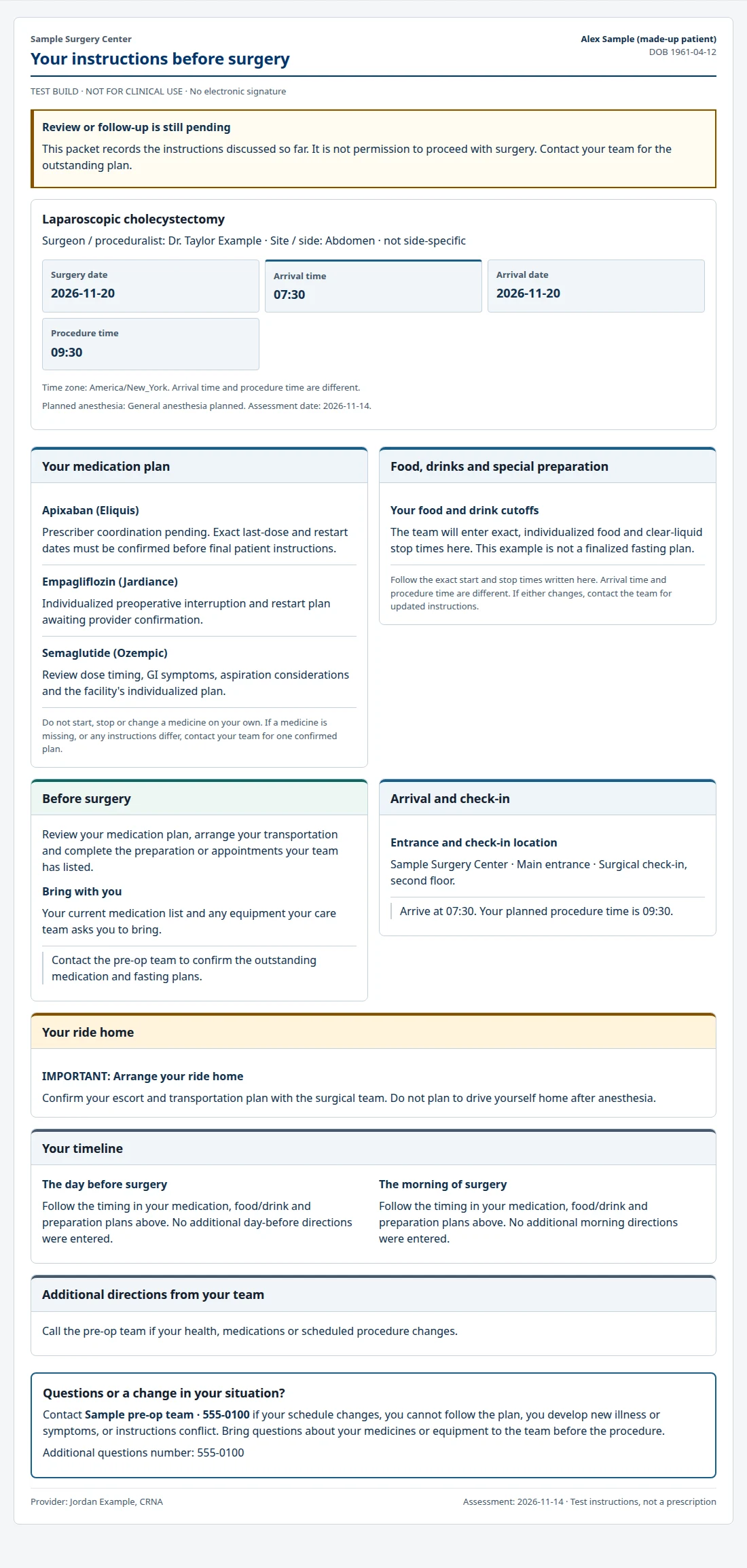
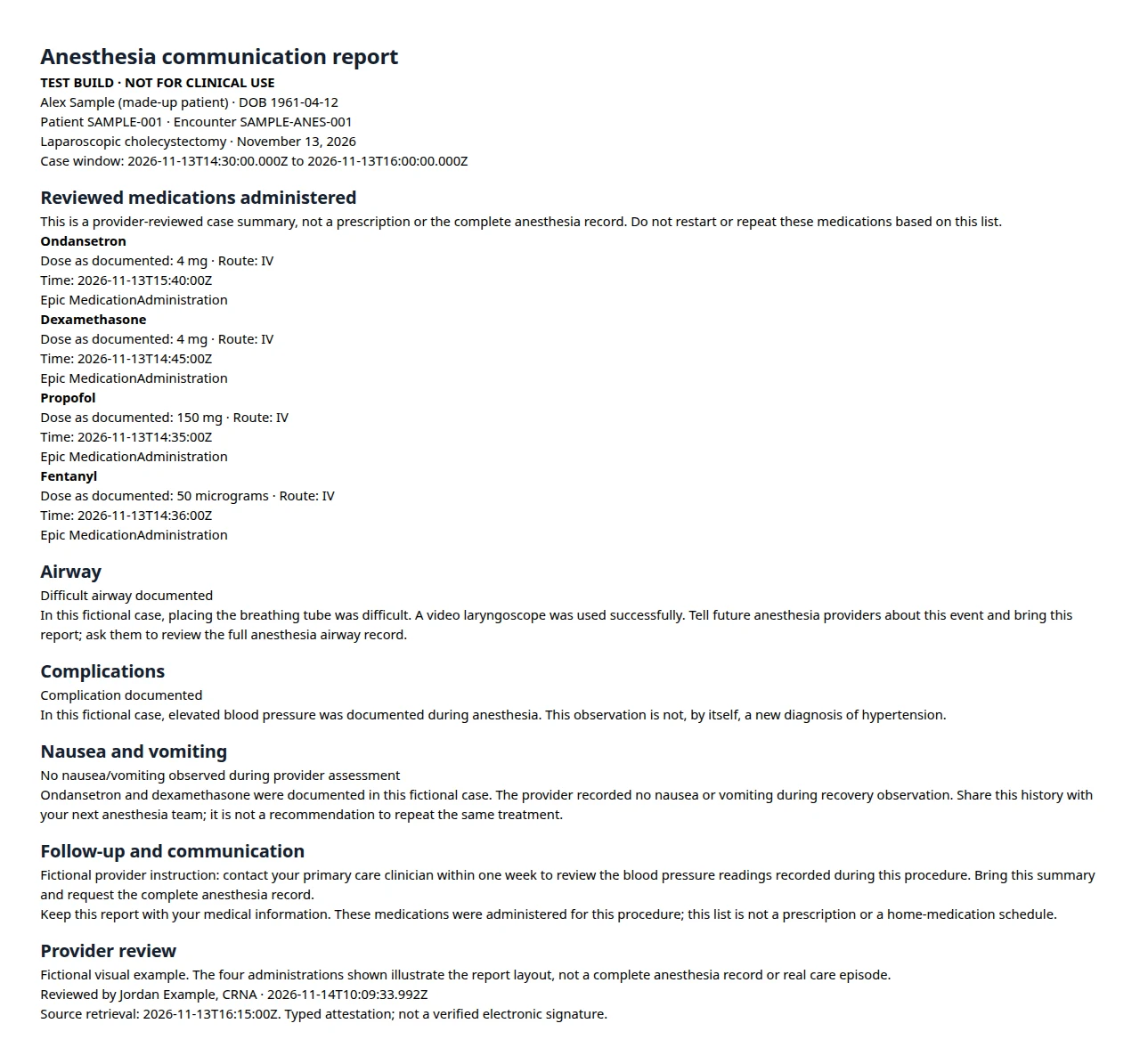
The clinical development workflows include provider-reviewed preoperative instructions and an after-anesthesia communication report. The latter can explain reviewed medication administrations, airway considerations, nausea/vomiting management and follow-up. These are professional review-and-print workflows, not an activated public patient portal or an automatic complete medical record.
Does the policy email system contain patient information?+
No. Policy communication is for facility guidance and updates, not patient-specific information. Planned clinical charting is a separate workflow that requires its own approved deployment and access controls. Never place patient information in an office-policy update.